No Fences By Justin Chatwin: Reflecting On A Six-Day Mongolian Expedition
You probably know Justin Chatwin from his roles in Shameless or War of the Worlds, but when he isn't in front of the camera, he’s often out chasing the horizon on two wheels or overlanding in his off-road camper. An actor, nomad, and deeply passionate motorcyclist, Chatwin has long used travel as a lens to understand the human condition.
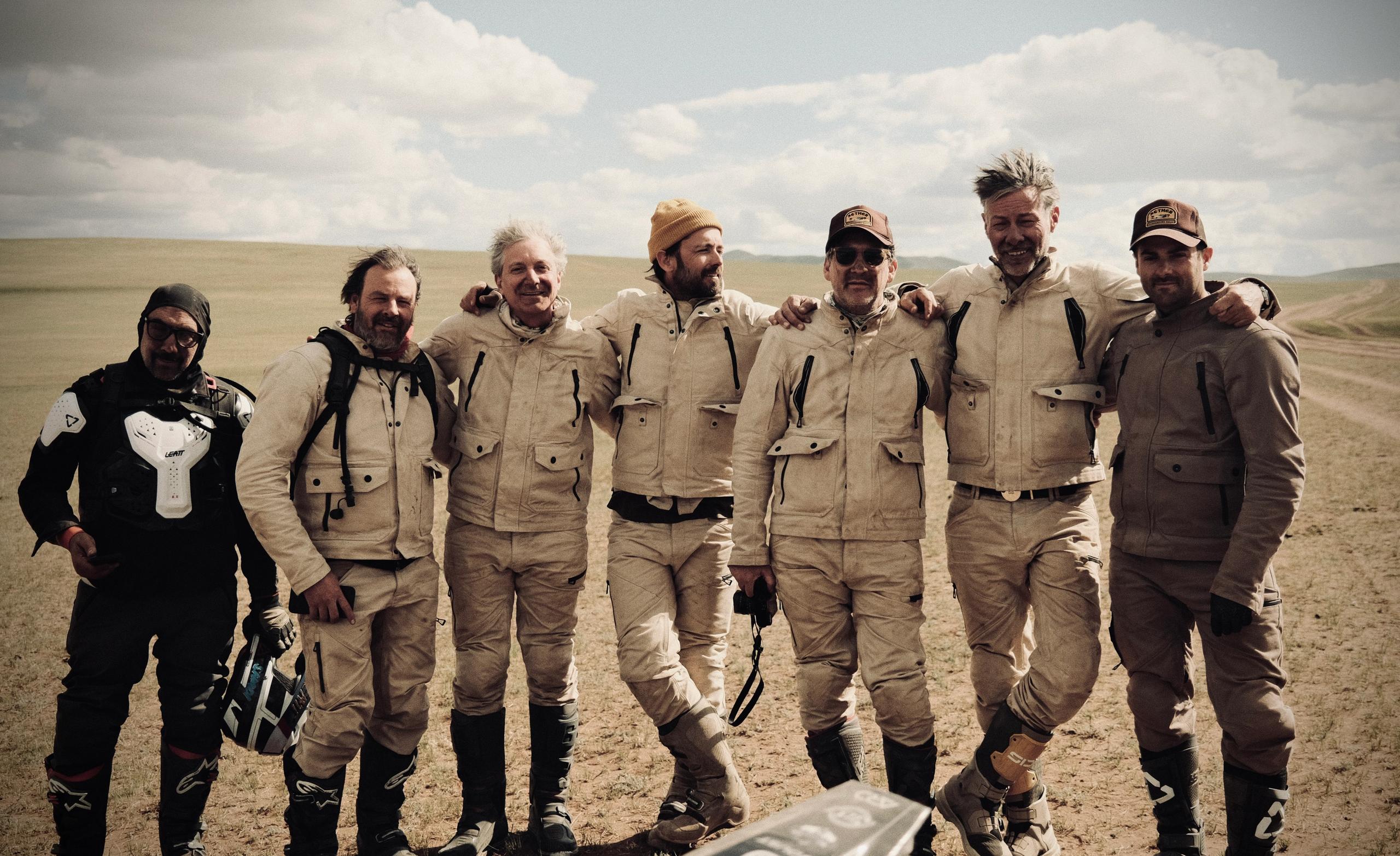
Recently, he teamed up with AETHER for an expedition that pushed the limits of both man and machine: a grueling, 1,000-kilometer dirt biking trek across the rugged terrain of Mongolia. Dropping a group of "wild, masochistic creatives" into a country with virtually no fences, the trip became less about standard tourism and more about a deep, internal exploration of human restlessness.
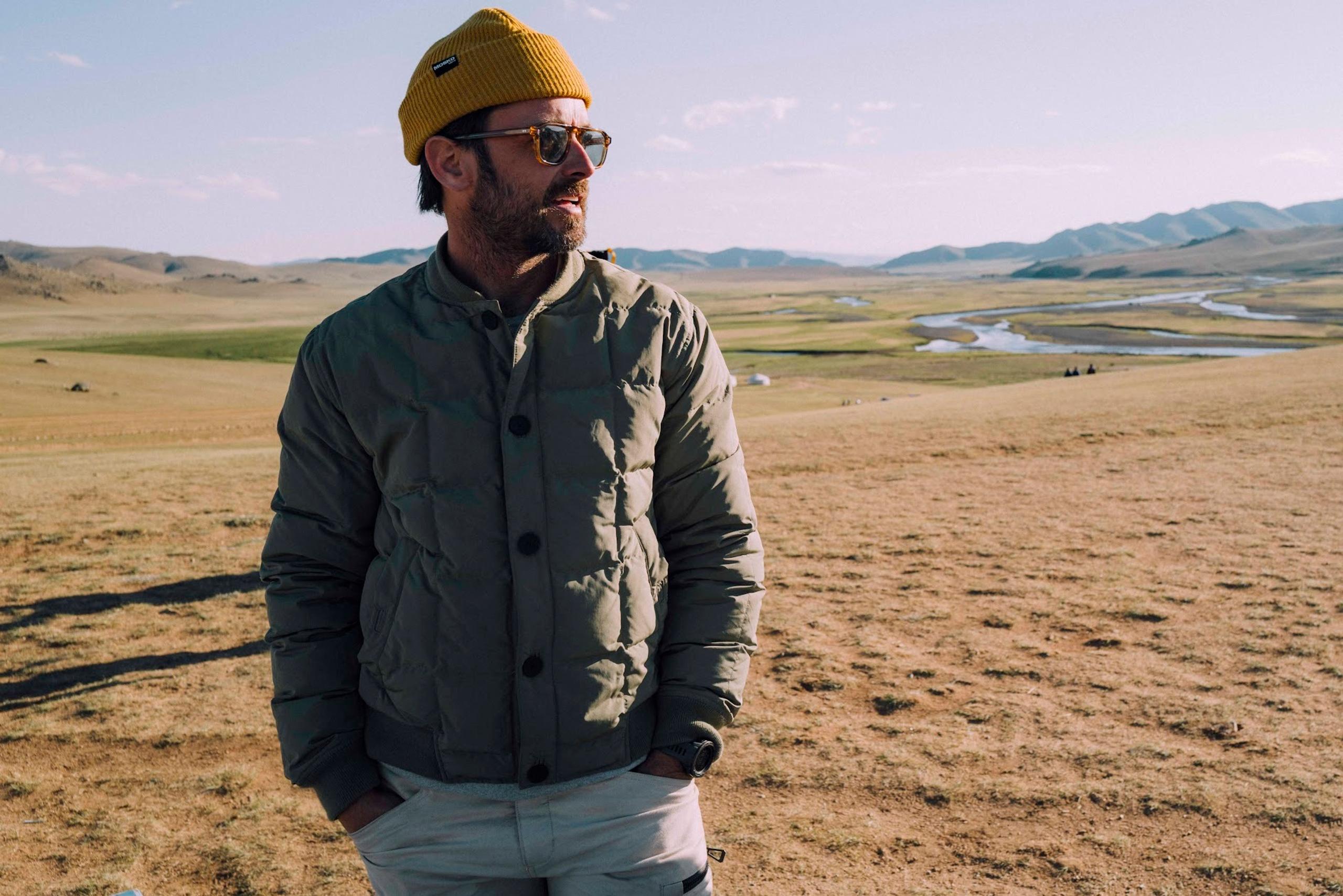
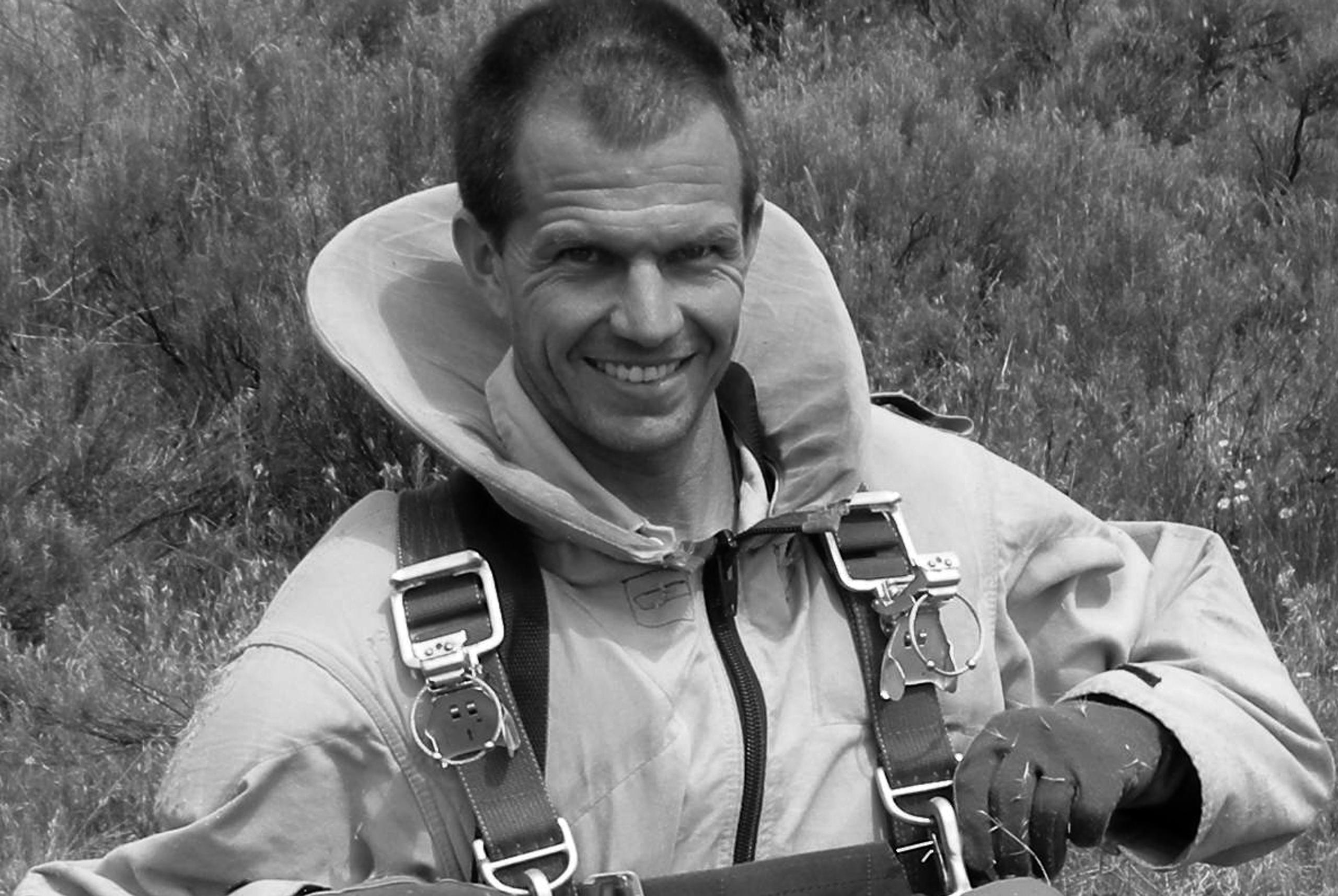
Justin Chatwin: Actor, Motorcyclist, Adventurer
Here, in his own words, is Justin’s reflection on the journey, the anatomy of movement, and what happens when you ride into the endless expanse.
No Fences
By Justin Chatwin
Mongolia: the land of the original nomads, where nowhere is off-limits.
Ever since I was a kid, the only thing I really wanted out of life was to see the world—especially the regions untouched by commercial tourism. I’ve always been drawn to the places where people warn you, “Don’t go there, it’s dangerous.” I want to live in a perpetual state of curiosity. When I’m at home, I often find myself pacing around, opening cupboards without knowing what I’m looking for. Laying down on a couch in the afternoon is nearly impossible for me.
I tend to agree with the legendary travel writer Bruce Chatwin’s philosophy that movement can cure all of mankind’s ills. Think about it: when a baby cries, you rock it, and it stops. Yet, from my own years of living out of my truck and off the back of a motorcycle, I’m also convinced that life wasn't meant to be lived in a state of exhausting, perpetual friction. So, where’s that sweet spot between movement and stillness?
There are very few places left in the world that haven’t been homogenized by modern capitalism and tourism; most indigenous cultures are slowly disappearing into the stressful gold rush of modern cities. So, when AETHER Apparel asked if I wanted to fly to Mongolia to see how real nomads live, I jumped at the opportunity. Plus, whenever someone asks me to go dirt biking, my answer is pretty much always yes.
Into the Mongol Wildchild
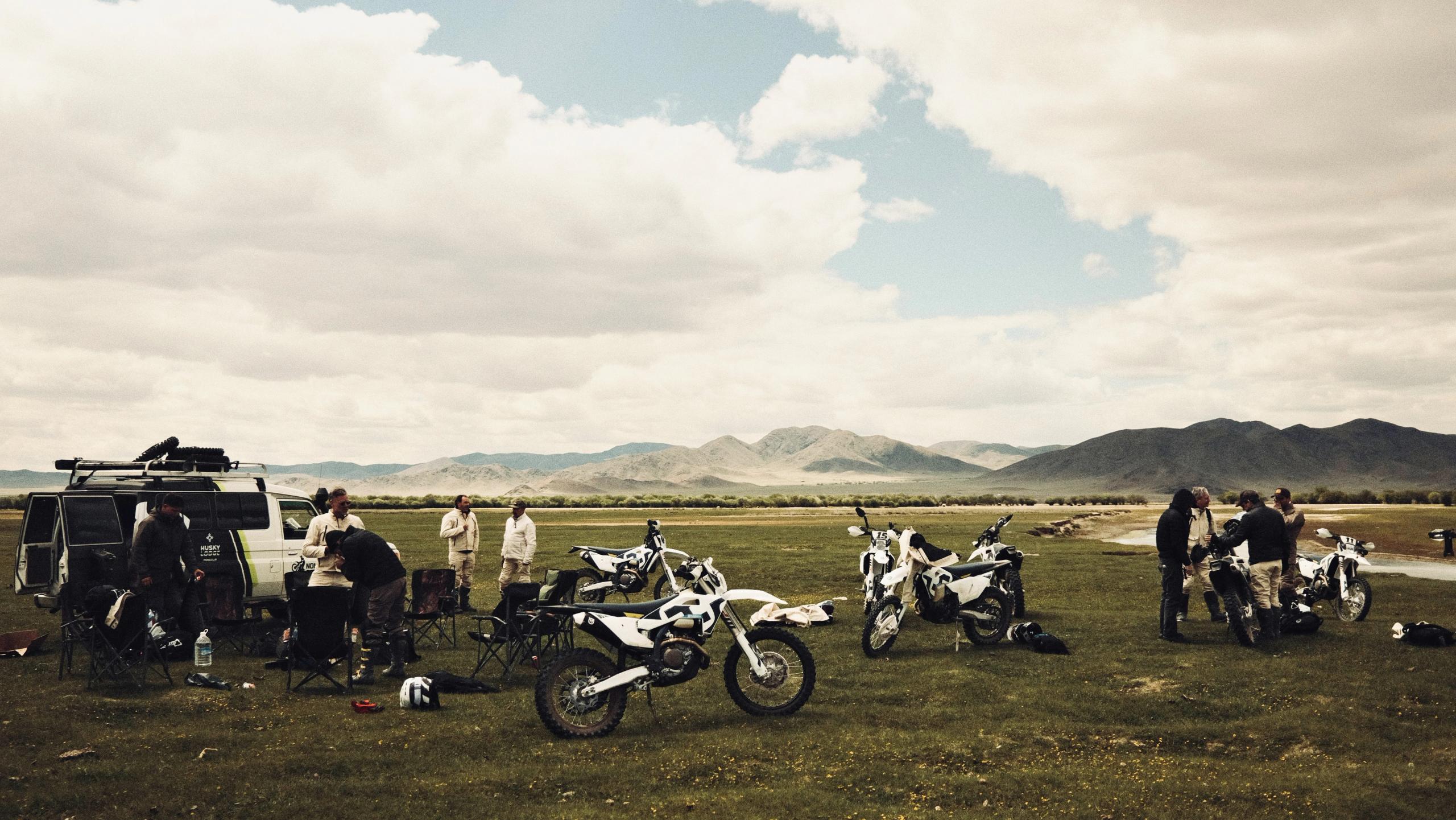
Our well-chosen group of ten from the East and West Coasts was a collection of wild, masochistic creatives down to take on 1,000 kilometers of unknown territory. Over the coming days, bound by a common love of adventure and two wheels, strangers became friends, and friends became stranger. The group consisted of myself, fellow actors Bryan Greenberg and Norman Reedus, AETHER’s co-founders Jonah Smith and Palmer West, AETHER’s director of marketing, Paolo Martinoglio, their in-house photographer Aaron Grimes, entrepreneur and 1933 Group co-founder Dimitri Komarov, filmmaker and photographer Shadi Perez, and vehicle designer and Earle Motors founded Alex Earle.
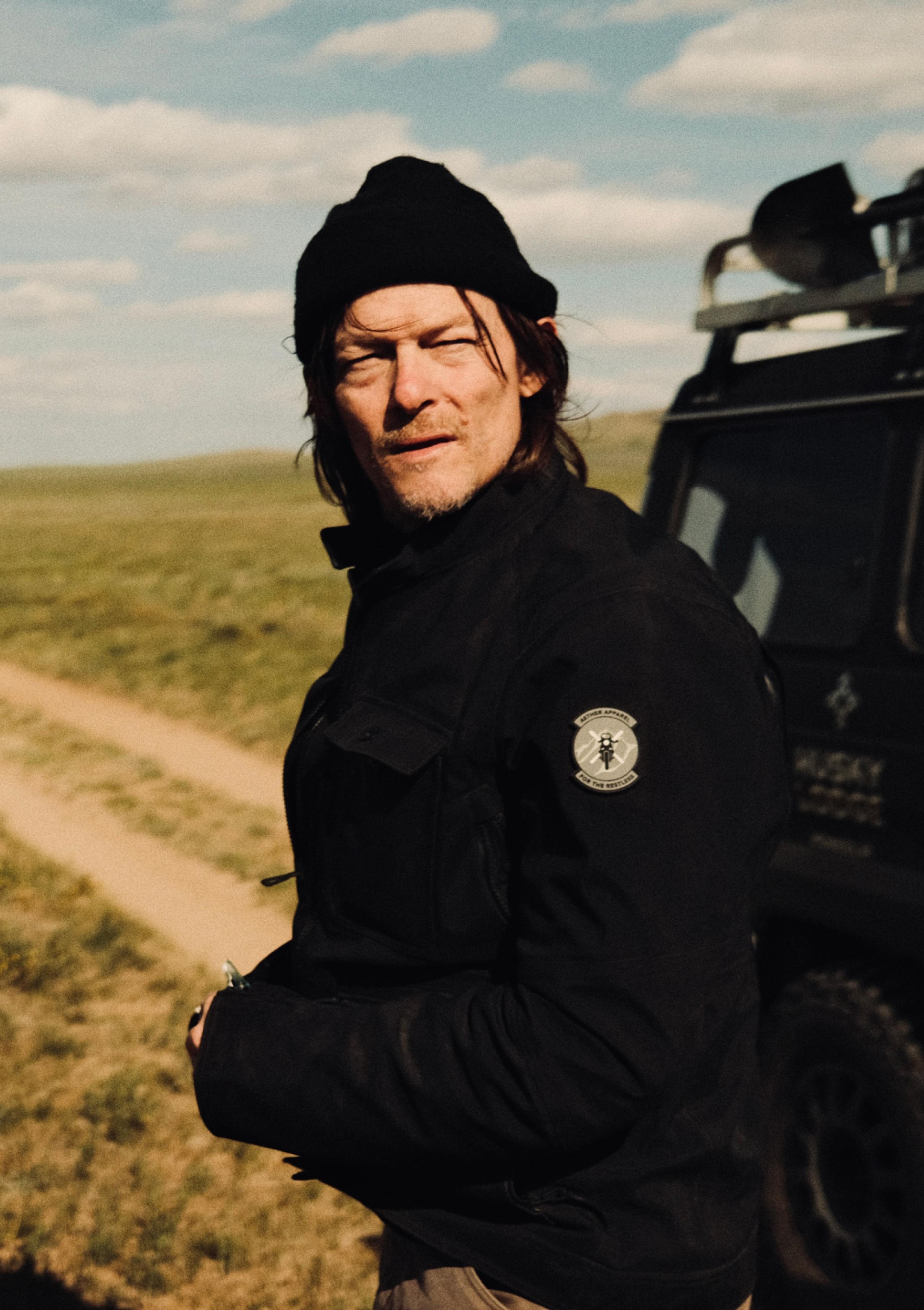
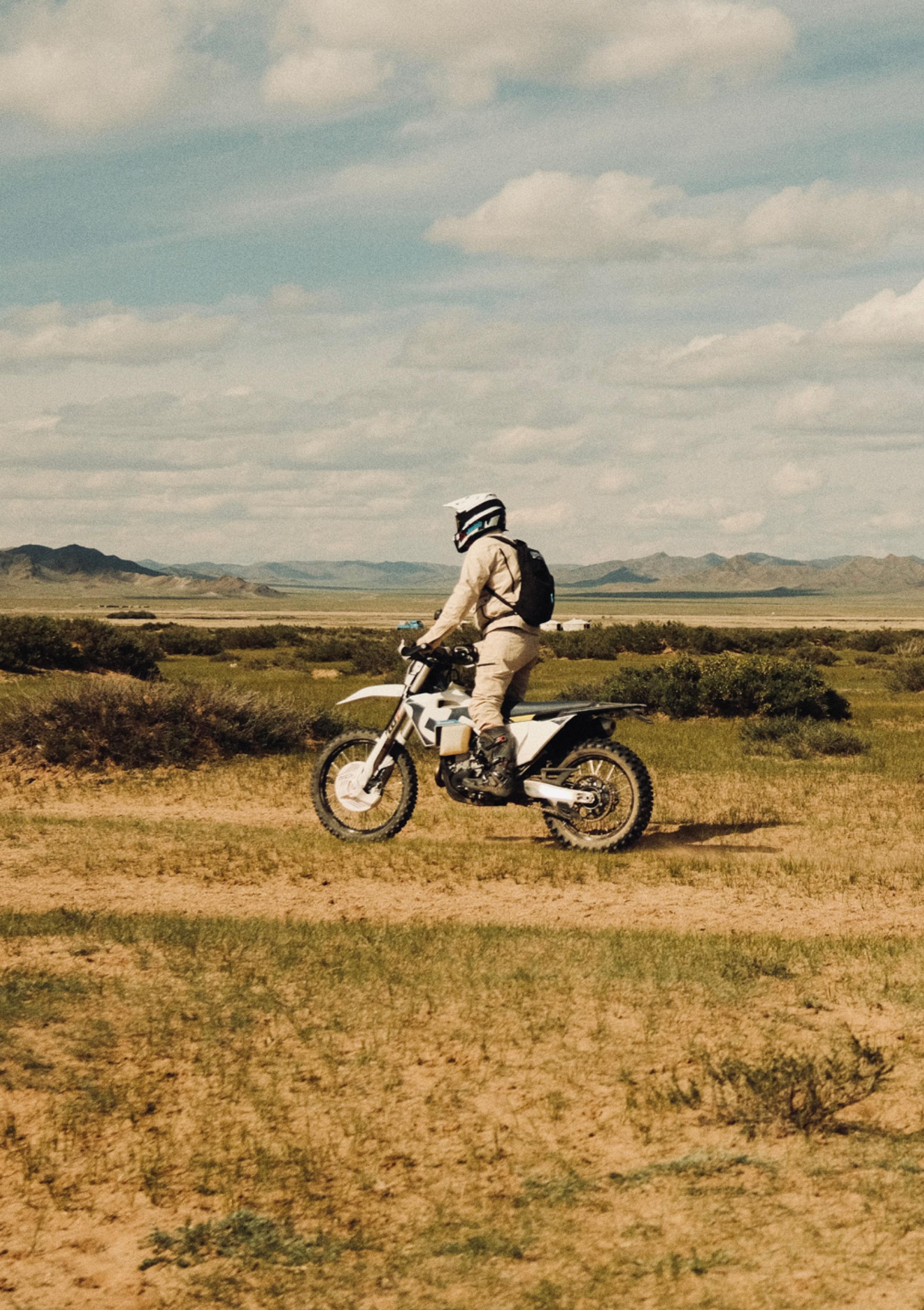
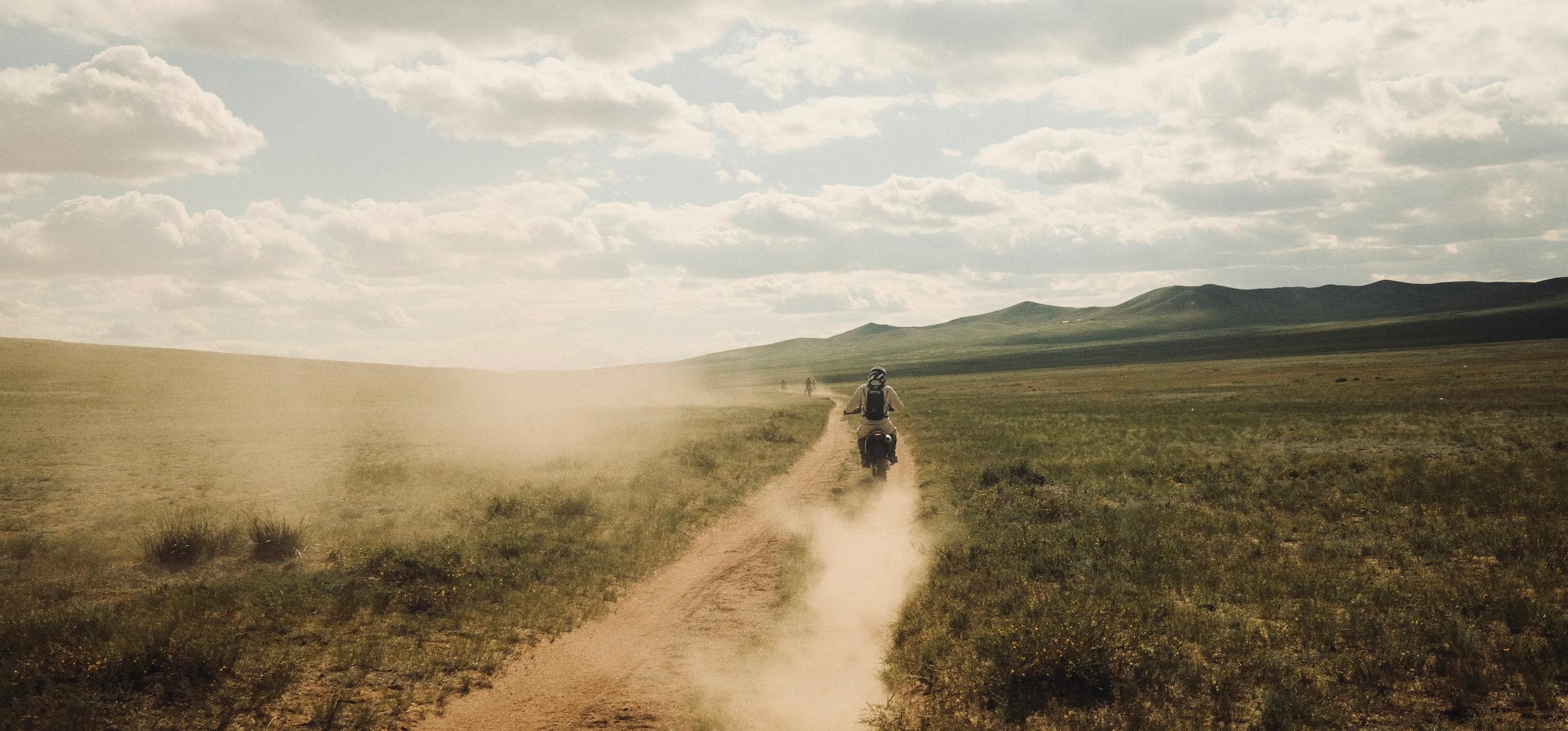
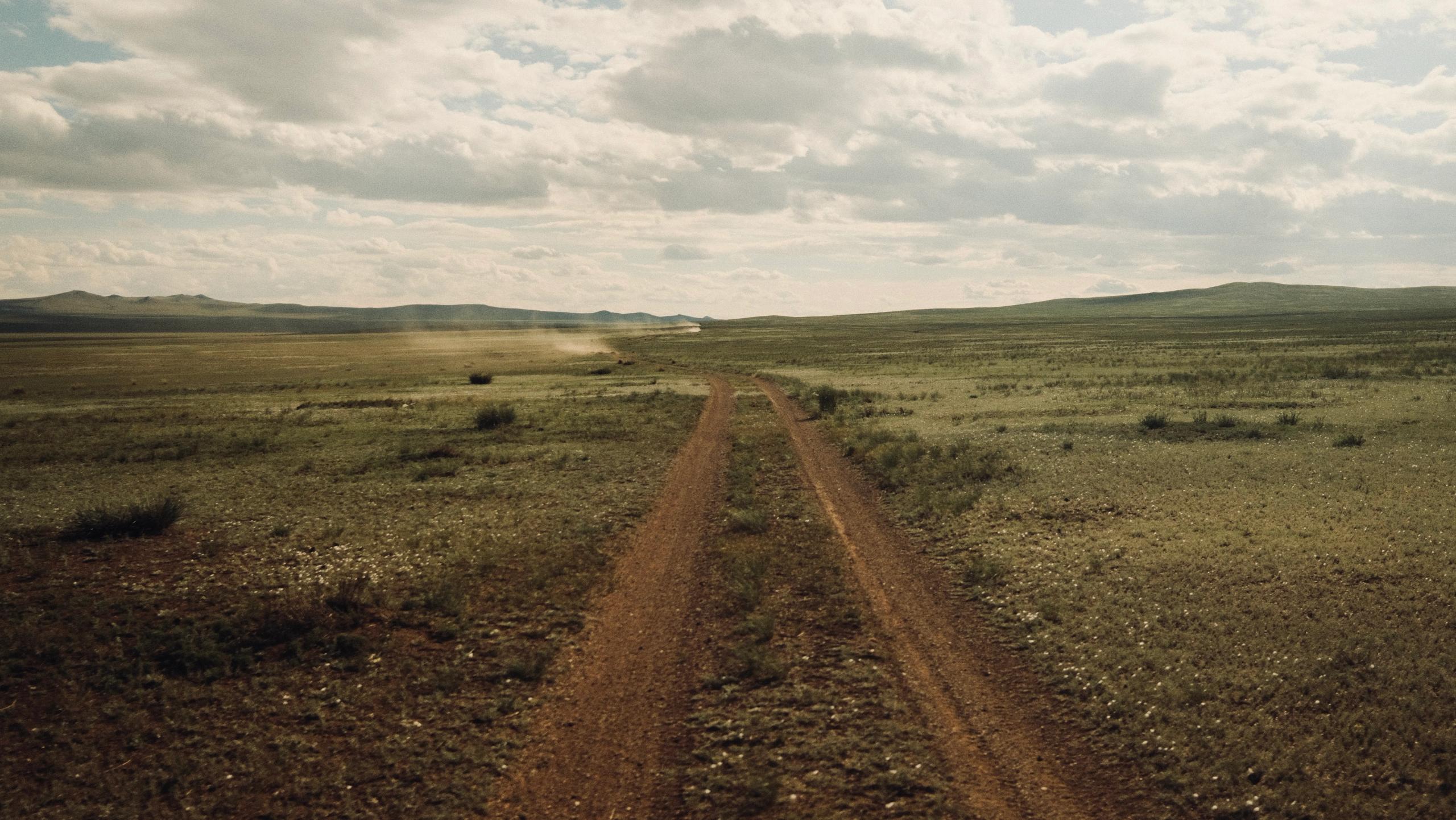
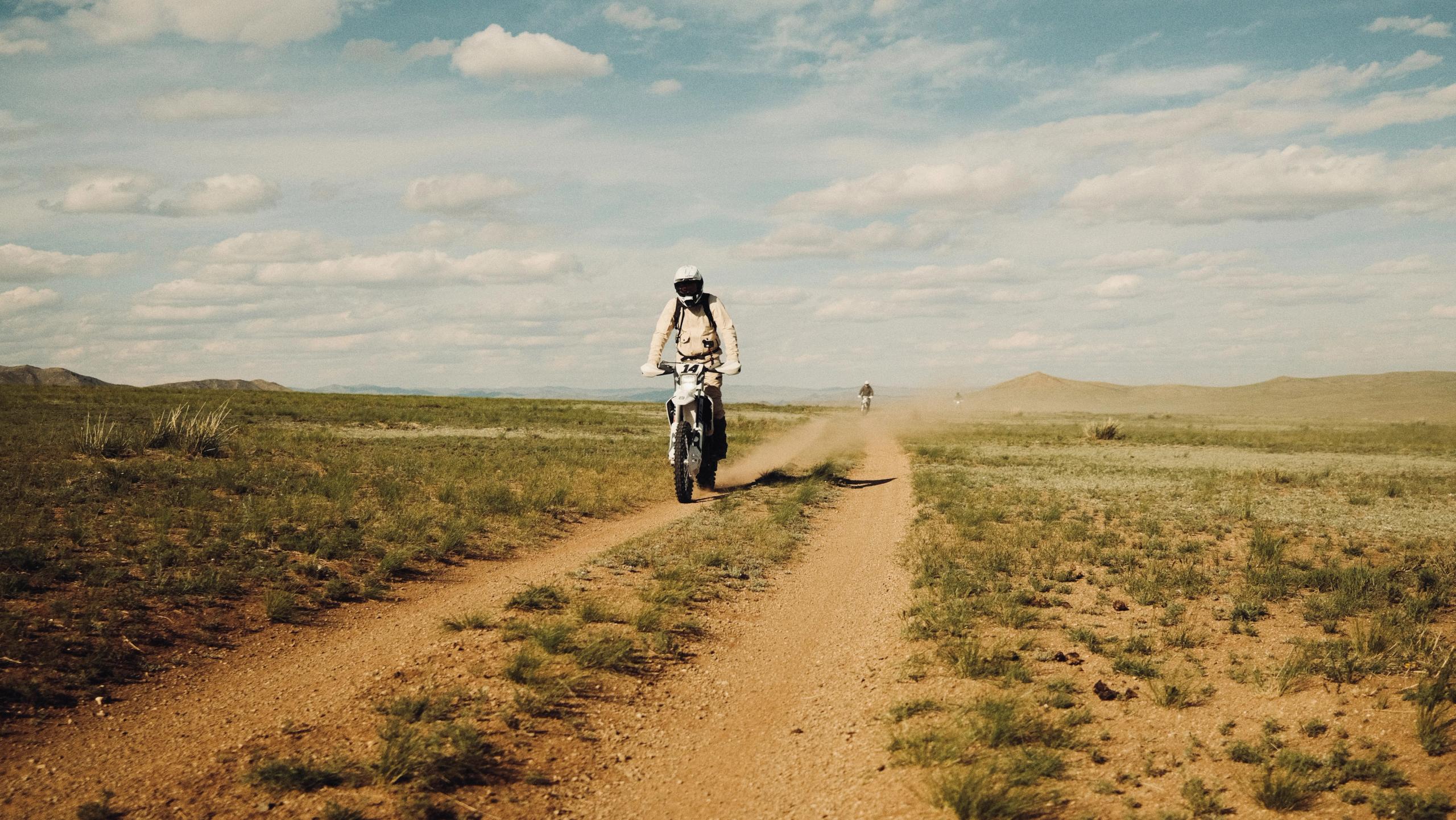
We touched down after a grueling 19-hour flight and plunged straight into the bustling traffic of Ulaanbaatar—an architectural, Mongolian wild-child of China and Russia where half of the country's three million people reside. We kicked off our journey on brand-new Husqvarna 450 dual-sports, dodging Mercedes G-Wagons and first-generation, duct-taped Priuses, before bursting out into the endless expanse of the wilderness. Within an hour of riding over hero dirt and golf-course-grade grass, the reality of the landscape hit me: I hadn’t seen a single fence. Nothing was off-limits.
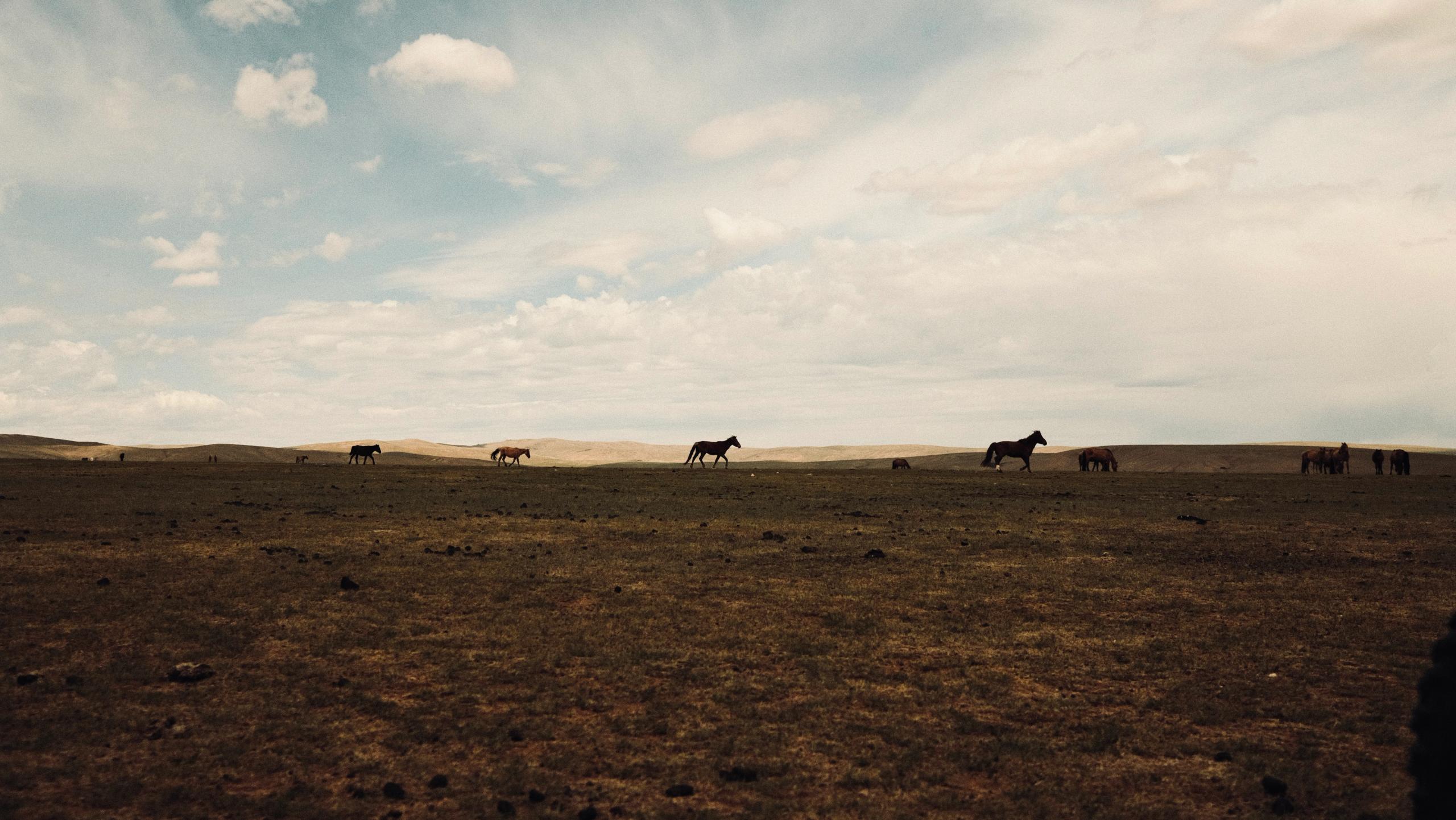
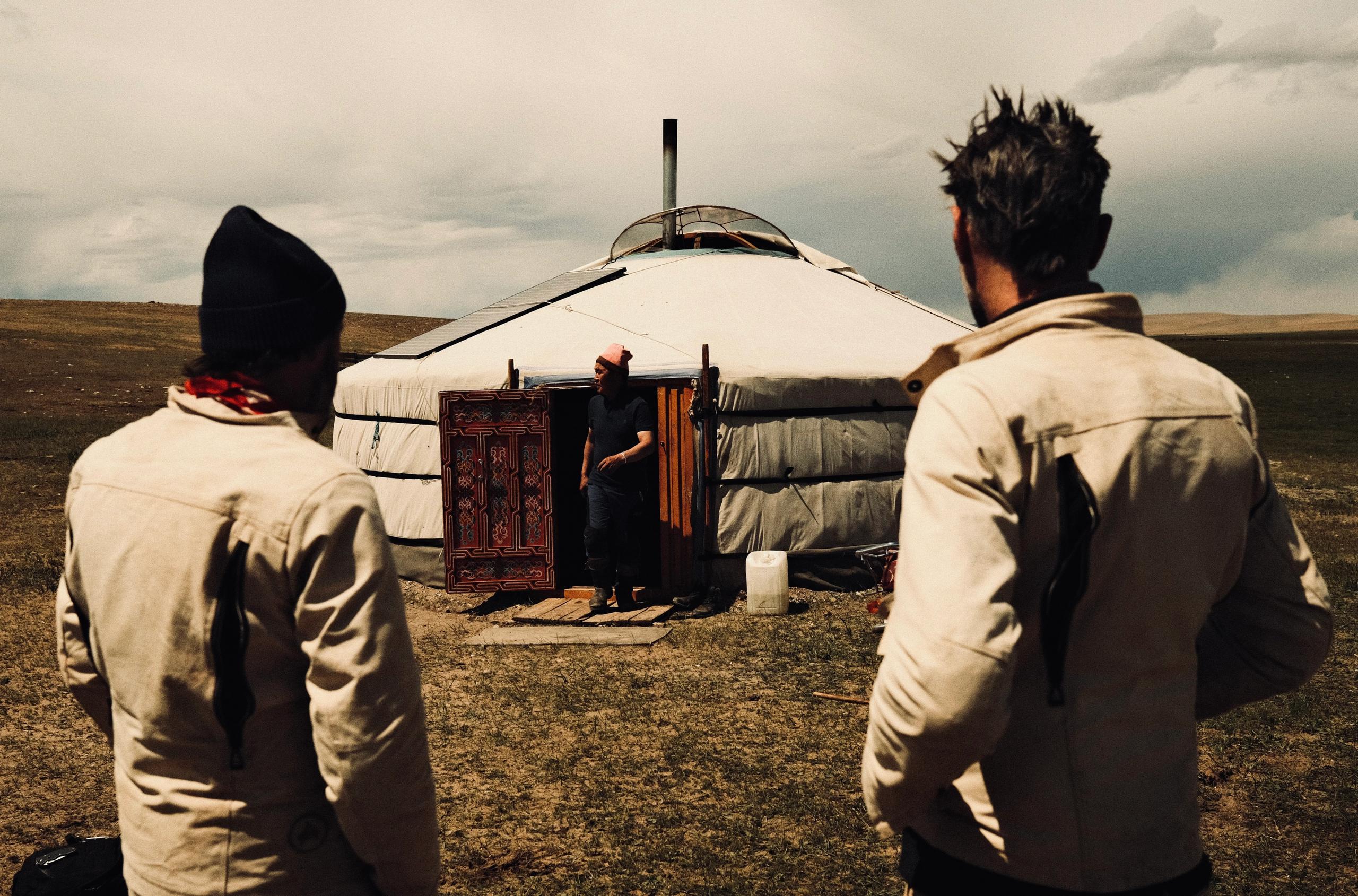
On the horizon, a single yurt sat beneath a sky filled with a pack of galloping wild horses. A loyal guard dog stood watch while its owner tended to a flock of sheep. Up ahead, our 24-year-old Mongolian guide, Turbo, waited patiently to see if his new American flock would make it through the thick desert sand traps of day one.
He didn't have to wait long for the chaos to start. After ten minutes, Turbo had to ride back to find Palmer, flat on the ground, trying to uncross his eyes after going over the handlebars in a deep, sand-rain-rut death wobble.
By the end of our 250-kilometer first day, the Bermuda Triangle of Mongolia had firmly pulled us into her stomach. We already had three major crashes, broken plastics, a concussion, and I had managed to loop my Husqvarna, snapping the tail clean off.
The next day, bruised and battered, Jonah asked, “How much further?” “Two more hours,” came the reply. Then it began to hail. After two more hours of riding, the question came again: “How much further?” “Two more hours.”
After that, we just stopped asking.
The Anatomy Of Restlessness
This fascination of mine—the nomadic instinct, my personal need for constant movement—is really about the anatomy of restlessness. Early wayfarers were deeply in tune with the ancient, primal rhythms of the earth. Somewhere along the bloodline, modern humans disconnected from that rhythm, giving rise to new beasts and monsters like depression, anxiety, and all sorts of mental illness. Those early wanderers saw the land in lines, which were passageways through life. To move across the landscape was survival. To stay in the same place was suicide.
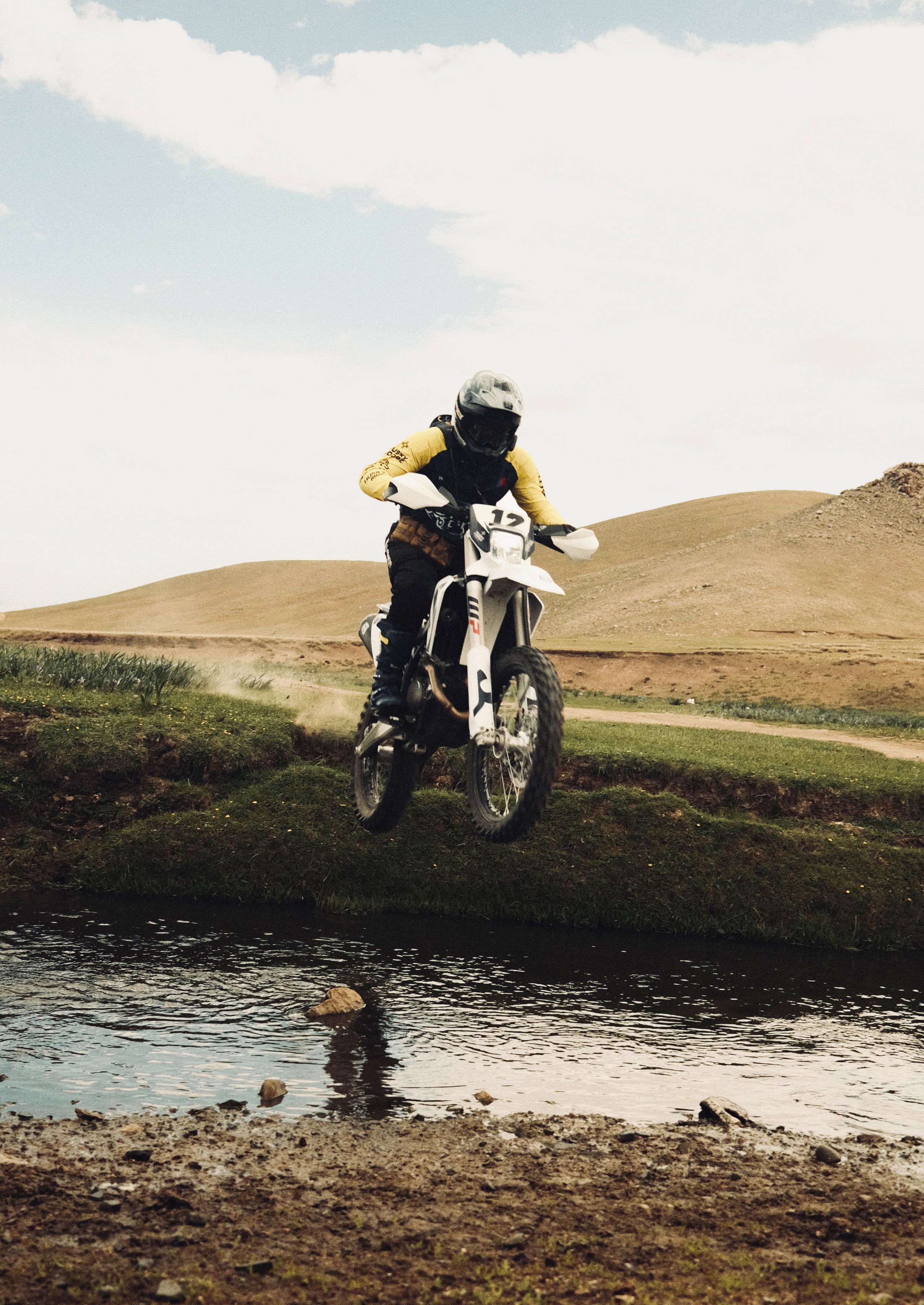
In Mongolia, that primal connection is still alive. The country holds tremendous pride in its land, supporting the people’s nomadic way of life. The nomads, in turn, support their animals, and the animals regenerate the land by tilling the soil without overgrazing. For a high desert, the environment is stunningly lush, painted in golden sunlight and green rolling hills.
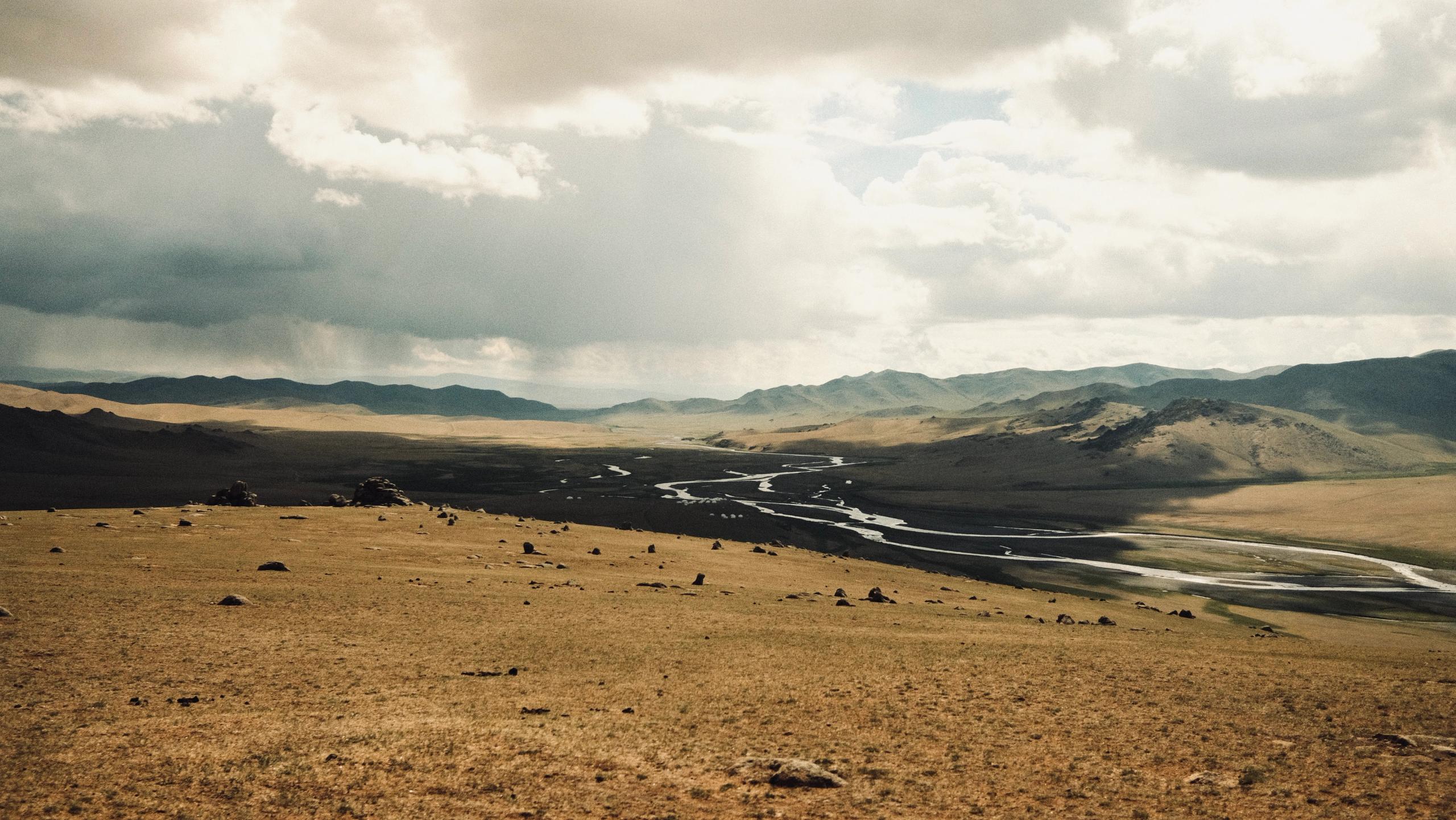
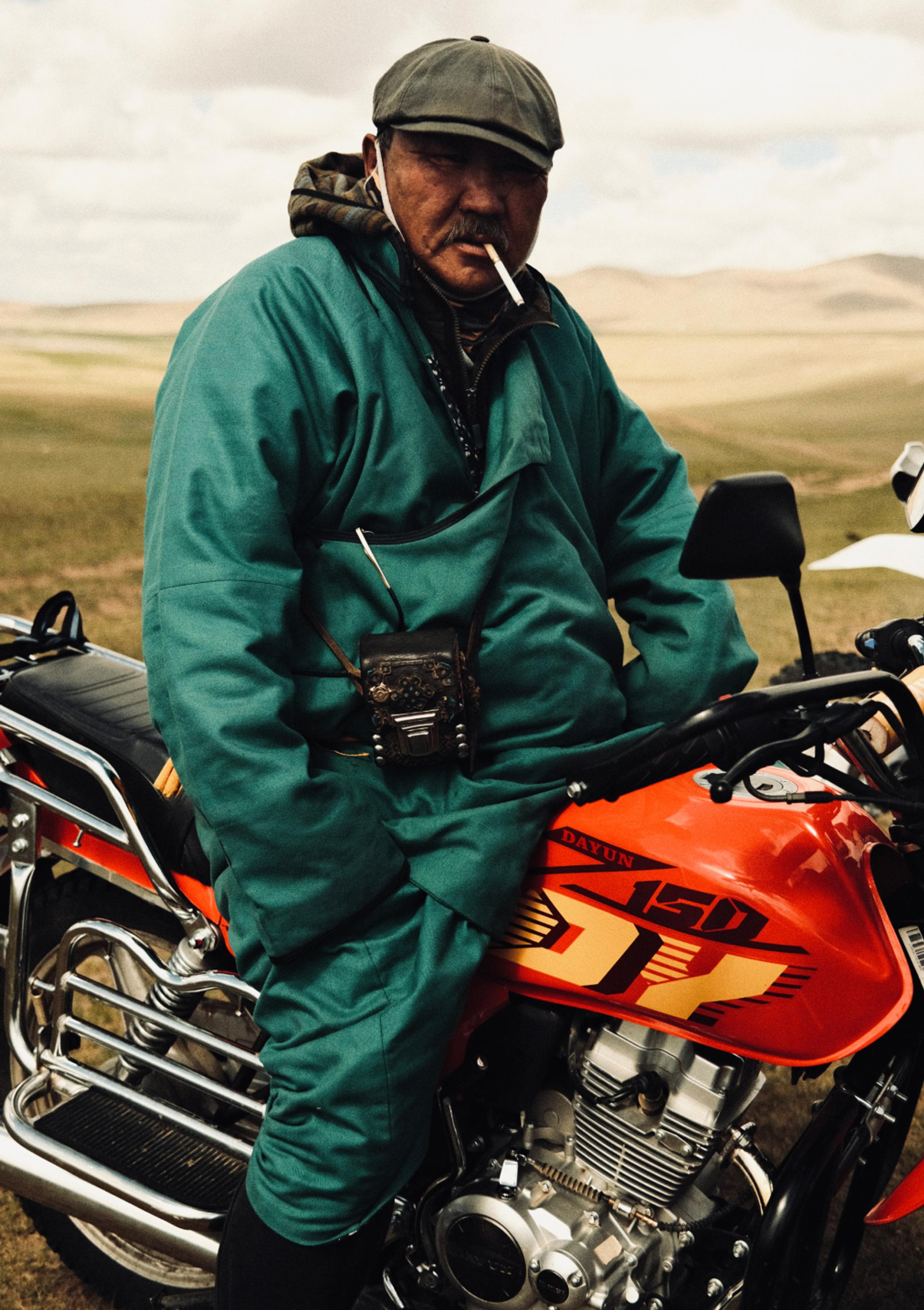
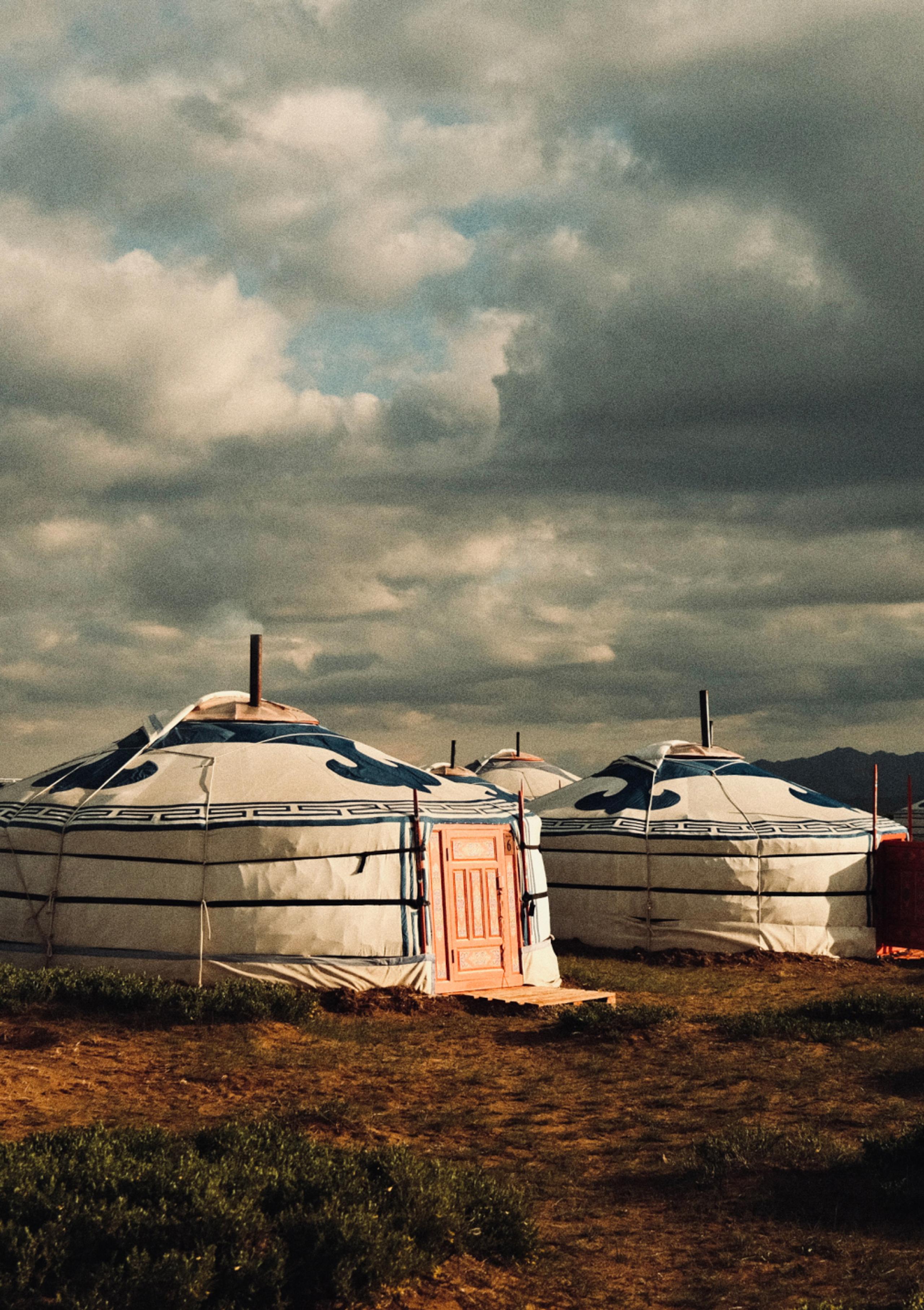
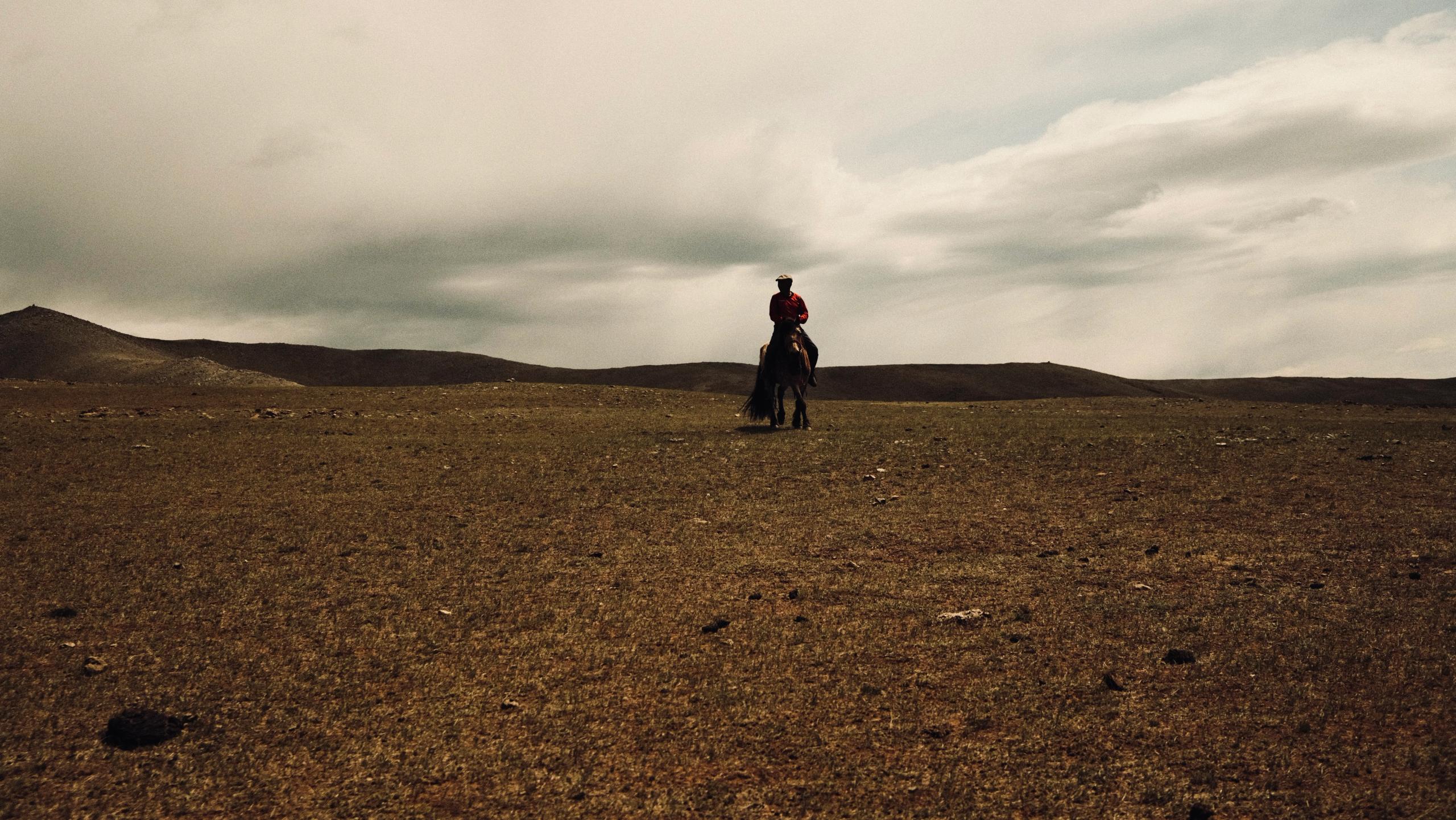
As we rode, we constantly dodged gopher death-holes, while the cow and wild horse carcasses littering the hills served as a stark reminder of how harsh the winters are here. We watched local nomads on cheap, Chinese 125cc dirt bikes corral wild stallions with homemade leather whips.
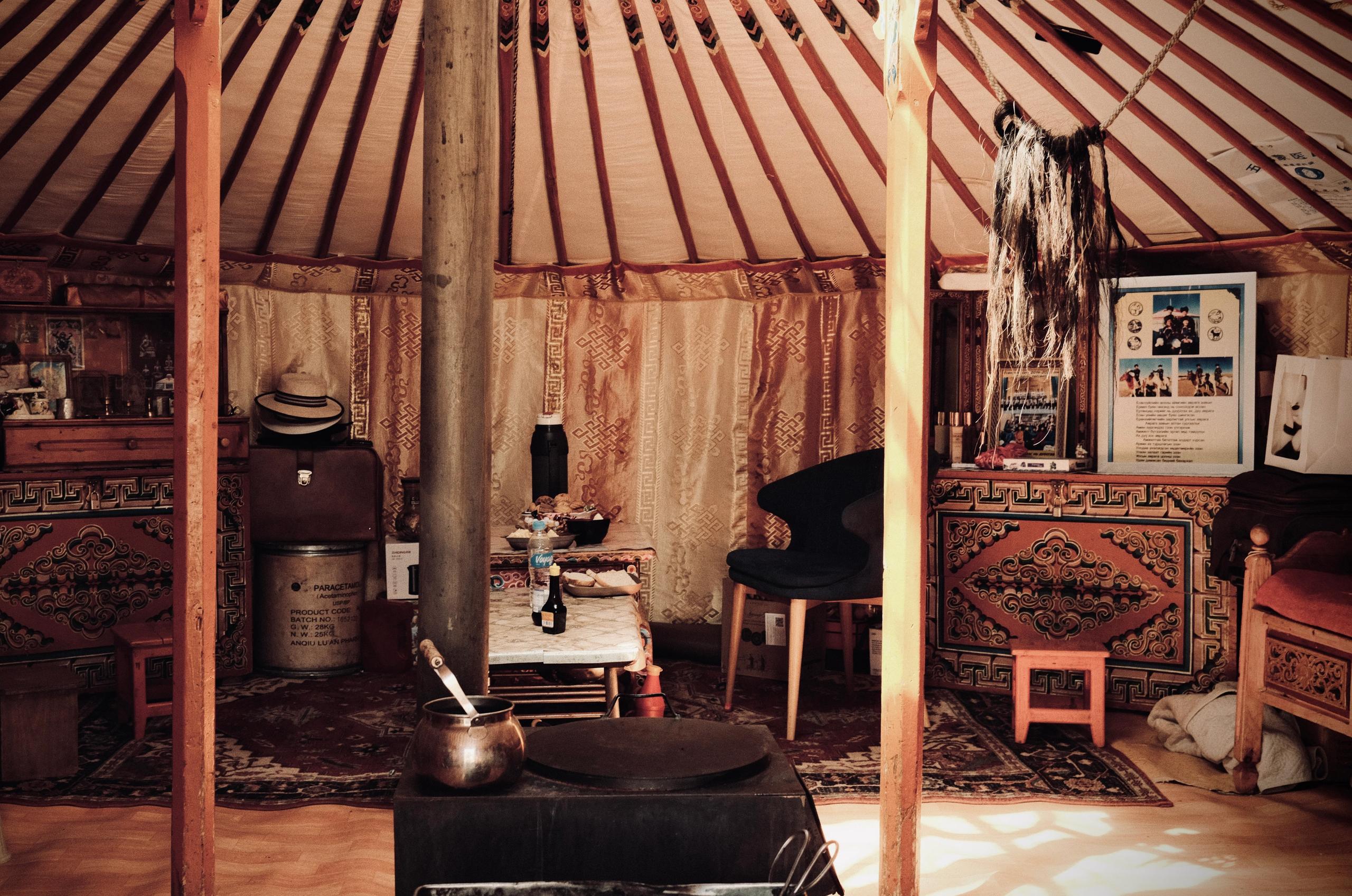
When we approached one family, we were welcomed into their home with immense kindness, curiosity, and minimal small talk. Mongols don’t waste words; their communication is intentional, but most of what they mean is found in the silence. As the women wove horsehair ropes and stirred steaming noodle soups, the men offered us Mongolian snuff—a traditional ritual used to connect with a stranger. We took it, and it left our nostrils burning like brandy poured over an open wound.
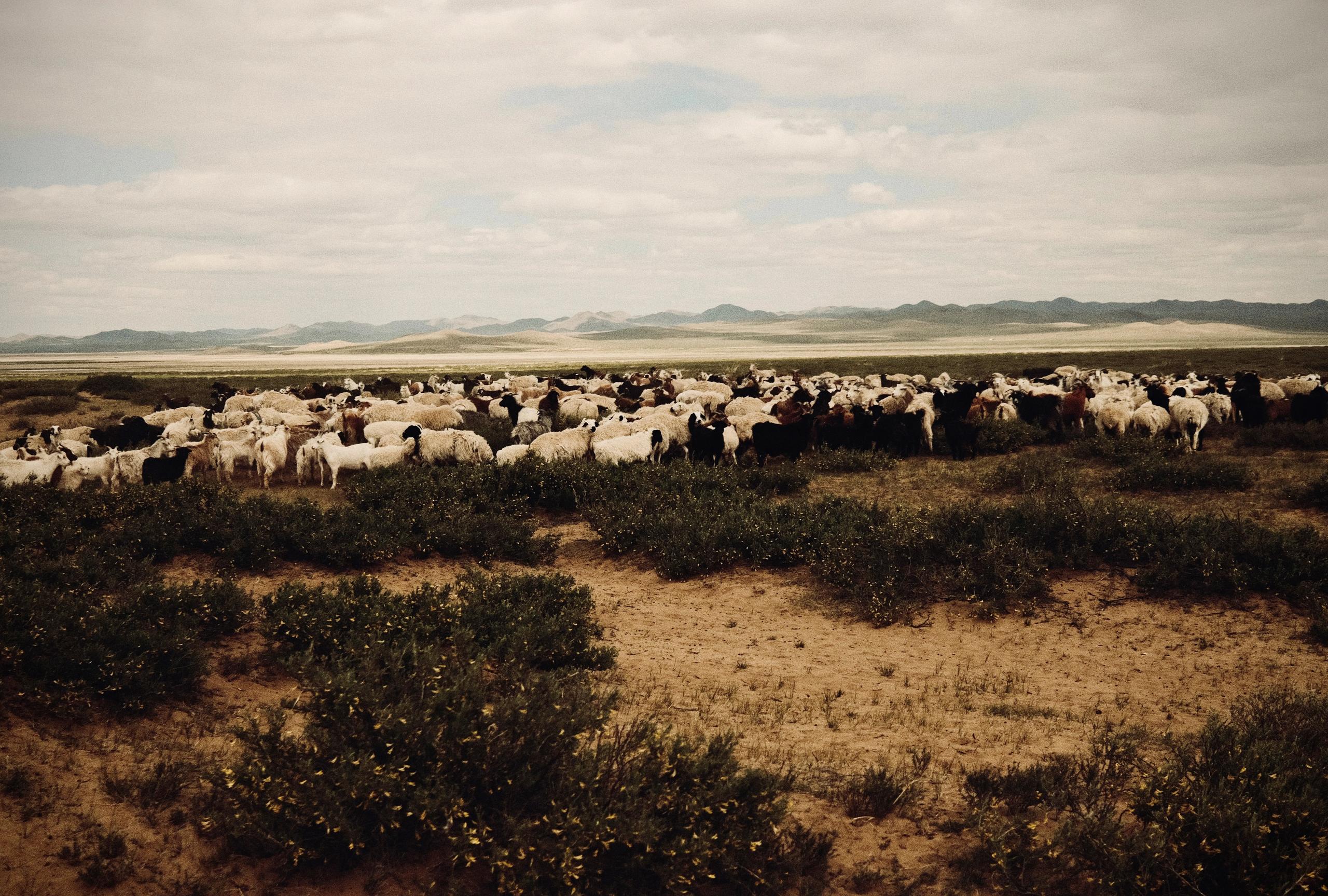
We pushed eastward, rallying through river valleys while dodging wild camels, eagles, vultures, cows, and massive herds of goats. As the hills grew colder and the grass grew greener, our heads got quieter. And still, there were no fences.
The Curse of Curiosity
In this country, if you get too relaxed, the soft sand will instantly kick you into a death wobble. Dirt itself doesn't hurt, but if you tense up and try to over-control where the bike wants to go, the landscape will punish you. Just ask Norman Reedus or Palmer West about their newfound love of deep-sand riding in Mongolia.
Sometimes you fall, bruise a rib, or dislocate a shoulder. But that’s the tax you pay to the curse of curiosity. If you possess that magnetic pull—that burning need to know what’s over the next ridgeline or around the next river bend—then you are probably one of us.
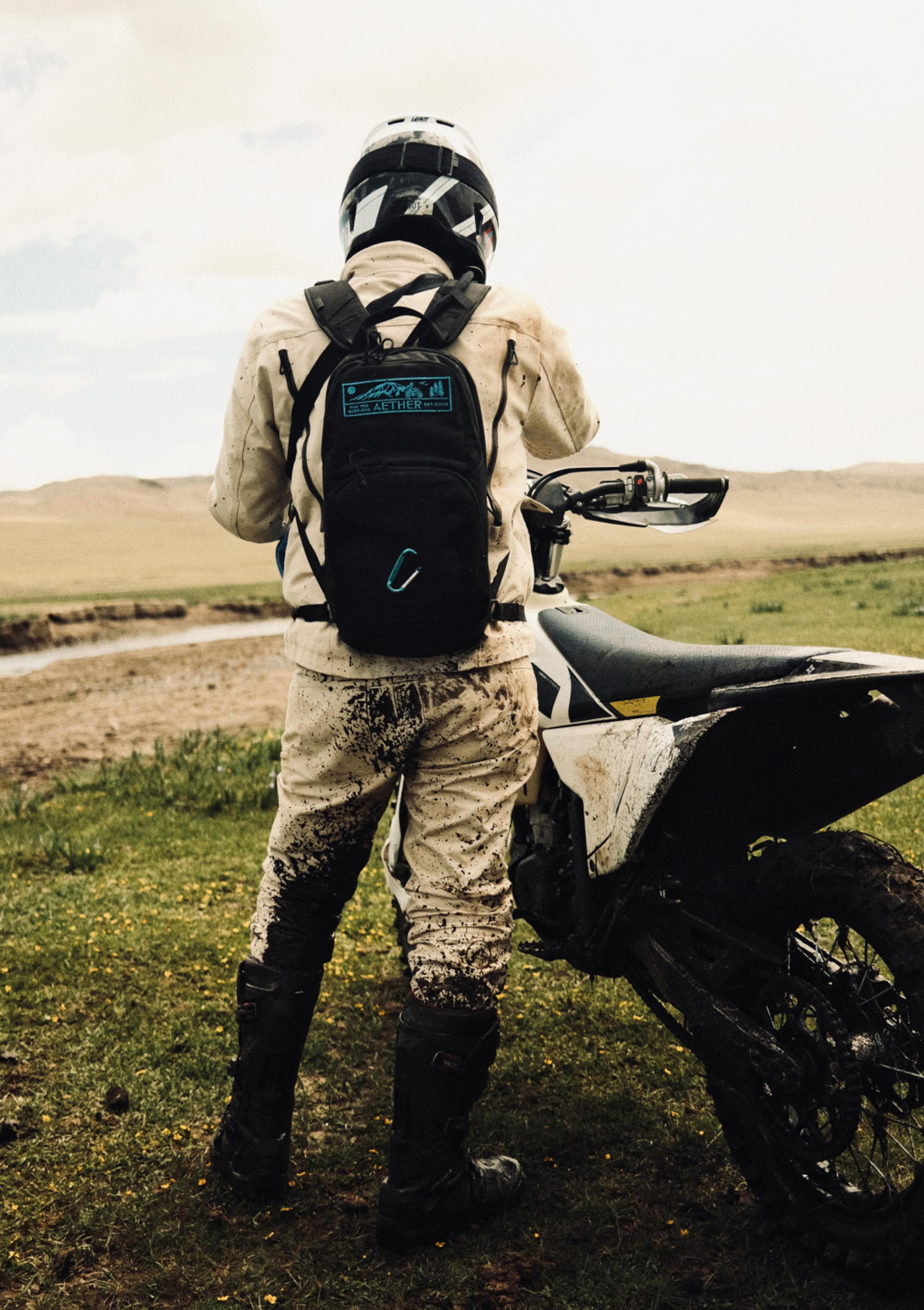
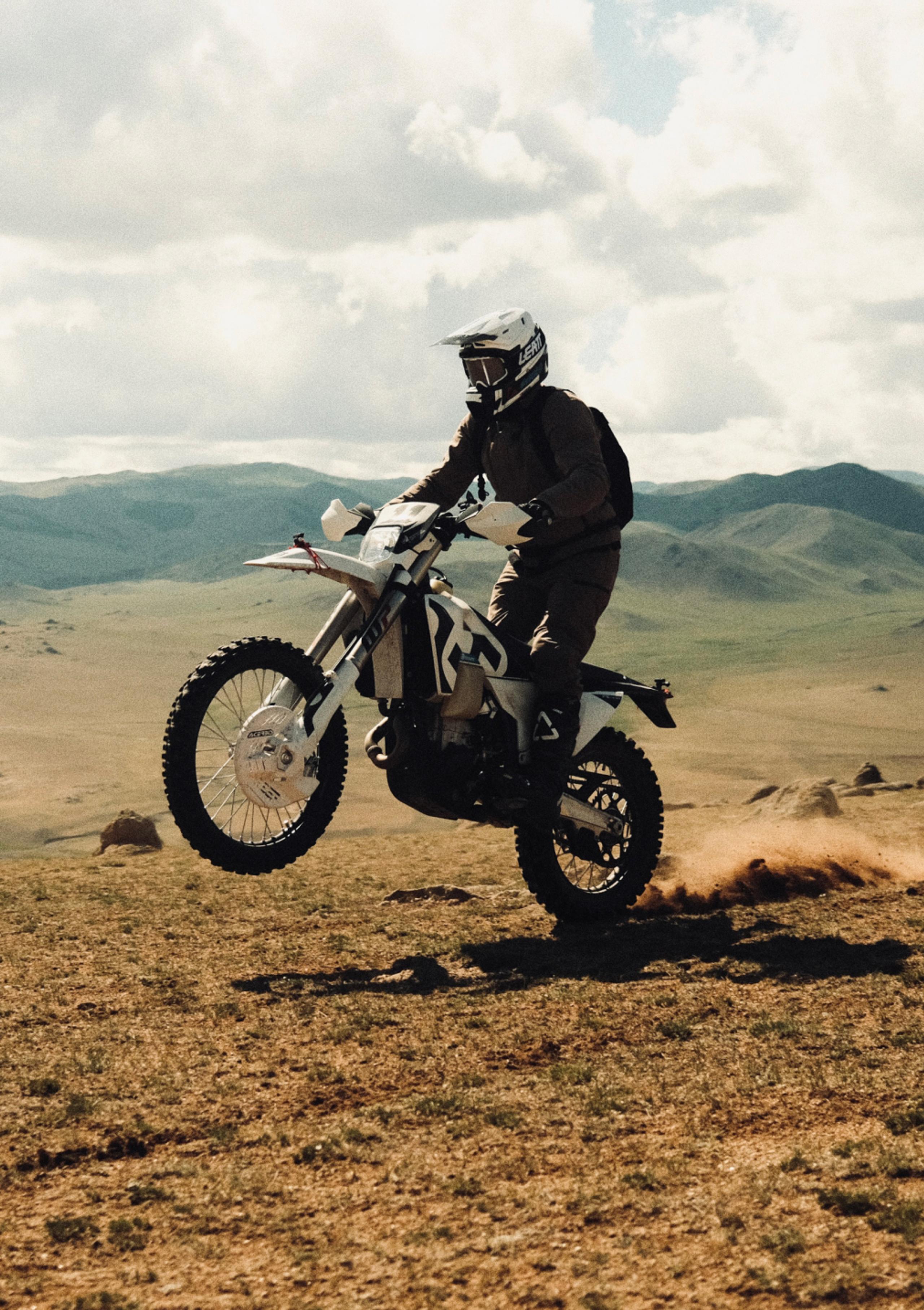
Most of the time, it’s the exact same thing around the corner, just a little bit different. But every now and then, you’ll come around a bend and hit an epic, grueling two-minute hill climb that tears at your back muscles while your brain screams, “This will never end!” But like anything in life, if you can pin the throttle through the discomfort of not knowing how long it will last, you eventually arrive on a high plateau at sunset. You stand there with a group of friends who were total strangers just five days prior. And maybe there’s a speech, a tear, a wheelie, a beer, or a joke. Or maybe, if you’re lucky, you just stand in silence and watch a herd of Mongolian elk track across the ridge.
Finding the Sweet Spot
To me, the most rewarding trips are always the ones where you are forced to push yourself and overcome obstacles—whether they’re spiritual, mental, or physical. Undergoing that kind of friction with like-minded people who maintain a positive attitude results in the greatest memories you can form. Group dynamics are everything, and this crew was exceptional.
The 19-hour flight and the brutal jet lag faded into the background, completely eclipsed by the profound freedom of this place. The open expanse, the total absence of private property, the beautiful simplicity of riding in a single direction all day—it forces you to be truly, irrevocably present.
What I learned out there is that it’s okay not to know which yurt you’re sleeping in next. What matters is that you keep moving forward (or backward) toward greener pastures with your tribe, continuously hunting for that elusive sweet spot between movement and stillness.
Restlessness can be a gift, or it can drive you insane. It can be the gunpowder that ignites your interest to explore simple, profound moments with a stranger who doesn't even speak your language.
So, even if you choose to pass on snorting or smoking whatever the man in the robe on horseback is offering you with his right hand, don’t miss the moment where he’s pointing with his left. Find the balance between the ebb and flow of doing nothing and that damn biological urge to keep moving. Never stop exploring—especially in those places with no fences.